
Aston Martin's Newey-Fueled Revival: Genuine Contender or Papering Over Cracks?
Weighing insider skepticism against the hype surrounding Aston Martin's upgrade-driven resurgence.
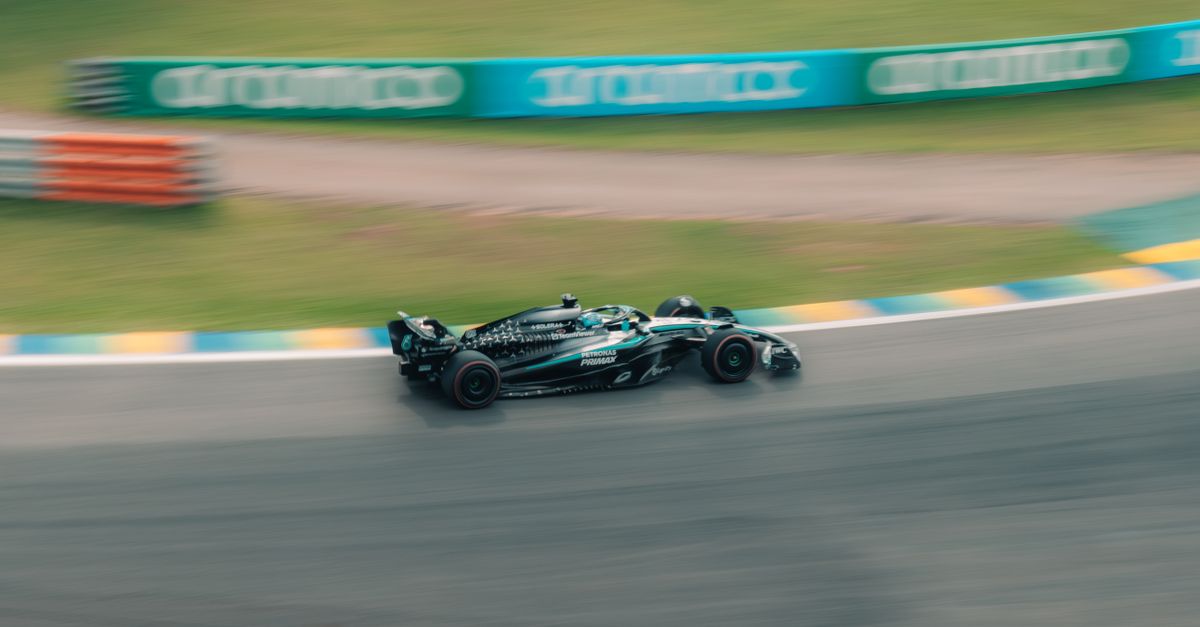
Aston Martin’s Hungarian Grand Prix upgrade landed exactly as such packages tend to these days — with a fanfare of paddock chatter, optimistic reads of Friday practice pace, and a very online debate about whether the team has finally turned a corner. But the most interesting contribution to that debate this week hasn’t come from a stopwatch. It’s come from Rob Smedley, whose data-led scepticism has injected a necessary dose of realism into a story that was in danger of running away with itself.
What’s happening
Aston Martin arrived in Hungary with one of the more substantial upgrade packages of the season, the kind of wholesale revision — new floor, revised aerodynamic surfaces, a fresh approach to how the car generates and manages downforce — that teams roll out when they believe they’ve identified a structural weakness rather than a marginal one. Given the context of Adrian Newey’s arrival at the team and the scale of investment poured into the Silverstone campus, it was inevitable that any meaningful step forward would be read through that lens: is this the first real evidence of the Newey effect, or just a competent trackside engineering department doing its job?
That’s where Smedley’s intervention matters. Using his own data analysis — what’s being referred to, semi-jokingly, as his “dark web” numbers — he’s put the Hungary gains into a more sober context, framing the upgrade as something closer to patching up known wounds than a genuine leap in underlying competitiveness. It’s a distinction with real substance behind it: there’s a meaningful difference between a car that’s been made less bad at the specific things it was previously bad at, and a car whose fundamental concept has shifted onto a higher-performing trajectory. Fernando Alonso’s own remarks around the update, filtered through Smedley’s framing, suggest the team itself understands this nuance even as the outside narrative races ahead of it.
Why it matters
This isn’t pedantry. How you characterise a step forward determines what you expect to happen next. If Hungary genuinely represents Aston Martin fixing symptoms — excess drag here, a peaky aero platform there, correlation issues between wind tunnel and track — then the team should expect diminishing returns from here unless further packages address root causes. If, on the other hand, it reflects a change in underlying philosophy, the gains should compound as the season progresses, because a better foundation makes every subsequent upgrade more effective rather than less.
Aston Martin’s own recent history makes this distinction unusually pointed. The team has spent the better part of two seasons wrestling with a car concept that looked promising on the drawing board and in early-season form but struggled to be developed at the rate of the genuine front-runners. That’s precisely the pattern you’d expect from a team patching up wounds rather than addressing a flawed foundation — early promise followed by a plateau as rivals’ more scalable concepts pull away. If Smedley’s data is pointing to the same dynamic recurring in 2025, that’s a legitimate red flag for anyone tempted to extrapolate a single strong weekend into a full title assault.
There’s also a personnel dimension. Newey’s reputation wasn’t built on single dramatic aerodynamic masterstrokes; it was built on establishing car concepts and design philosophies that entire technical departments could then develop with confidence over a season, and often over several. A genuinely Newey-shaped step change in Aston Martin’s competitiveness was never going to appear fully formed in one upgrade at a midpoint of a season he’s only recently joined. Judging Hungary as evidence for or against his influence is, in that sense, premature on both sides of the argument.
The wider context
F1 history is full of upgrades that were oversold in the moment and undersold in hindsight, and vice versa. Teams under commercial and reputational pressure — and few teams carry more of both right now than Aston Martin, given the scale of Lawrence Stroll’s investment and the very public hiring of Newey — have every incentive to let a promising set of Friday and Saturday numbers shape the story before Sunday’s race pace, tyre degradation and, crucially, sustained multi-race form have had a chance to confirm or deny it. Insiders like Smedley exist precisely to interrupt that cycle, cross-referencing team-supplied narratives against independent data before the paddock consensus hardens into fact.
That scepticism doesn’t mean the upgrade was a failure, or that Aston Martin’s broader project is misguided. It means the sensible read of any single-weekend gain is provisional until it’s been stress-tested across different circuit characteristics, weather conditions and race distances — the full range of scenarios that expose whether a car’s newfound pace is architecture-deep or track-specific.
GP Headlines’ take
Our view: the Hungary package is a real, tangible step, and Aston Martin deserve credit for identifying and addressing genuine weaknesses in the car. But conflating that with proof of a Newey-driven renaissance is getting ahead of the evidence. The honest scorecard here won’t be written this weekend or even this season — it will be written in how the team’s development curve behaves once Newey’s fingerprints are properly on the car’s fundamental concept, likely from 2026 onwards under new regulations that reward exactly the kind of first-principles thinking he’s built his career on. Until then, cautious optimism is the correct posture — not blind faith, and not dismissal either.